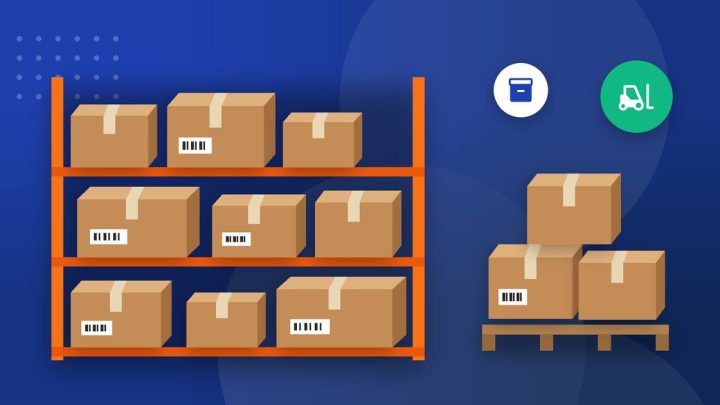
The Packing Operative role is one of the most searched-for openings right now. It is a job you can get into without previous experience, on a fixed contract with real benefits. Here is how to apply properly, so you do not lose the opportunity to a form filled in badly.
The application process for a packing operative role
Factories recruit through their own process and also through the recruitment agencies that serve the industrial estate near you. The process is free from beginning to end: no legitimate employer charges you for an application, a medical exam or a uniform.
The idea is simple. People who fill in their details calmly and without mistakes get much further than people who rush. Set aside ten minutes, keep your documents next to you and do the whole registration in one go.
Look for the employer's official careers page and follow the steps below so you do not miss anything in the registration.
- Map the factories and distributors near you.Industrial estates concentrate several operations recruiting at the same time, and the works transport usually covers the surrounding neighbourhoods.
- Register on the careers sites.The larger employers keep a permanent candidate list and recruit from it whenever they open an intake.
- Go to the local recruitment agencies.A great deal of packing recruitment starts through an agency, particularly around production peaks and seasonal runs.
- Prepare for the health check.A clinical assessment, and in some sectors an eye test, is part of the process before you are taken on.
⚠️ Worth knowing: One wrong digit in your phone number or one wrong letter in your email address is enough to lose the position, because recruitment simply cannot reach you. Check both twice before you submit.
More about the packing operative role
Every product that reaches a shelf or a doorstep was put into its box by somebody. Food, cosmetics, household goods, pharmaceuticals, distributors and e-commerce fulfilment centres all run packing lines every day of the year, and the packing operative is the entry role in that whole structure. This is not the same job as bagging at a supermarket checkout: the work here is on the production side, on an industrial rota, with the shift enhancements that come with it.
This is a job of steady rhythm and attention to a standard. The employer trains you on the line, so what is really being assessed is your availability for the rota and whether you pass the health check.
ℹ️ Important: The sector matters more than the employer. Food, cosmetics and pharmaceutical packing consistently pay above e-commerce fulfilment for the same entry requirements, so it is worth asking what is actually being packed before you accept.
Pay and benefits
Pay follows the rate set for the sector in your area, and the rota is what changes the total — a rotating or night pattern carries enhancements that a straight day shift does not.
What the package usually includes
- A written contract from the first day, at the rate set for the sector
- A night enhancement and a shift enhancement on rotating patterns
- A canteen on site, or a meal allowance where there is no canteen
- Works transport laid on for the shift in most larger operations
- Safety footwear, gloves and any other protective equipment supplied
- An annual bonus in the factories that hit their production target
A lot of people forget to count the value of the benefits when they compare two offers. Transport and meals together often add up to as much as a pay rise would.
Requirements to apply
📋 What employers ask for most often
- Basic schooling, completed
- Minimum age of 18
- Being comfortable standing and doing repetitive movement for a full shift
- Availability for a rotating rota, including nights and weekends
- Attention to the packing standard and to counting accurately
- Passing the pre-employment health check
Documents you will be asked for
Once you have been accepted, the employer asks for a set of documents to complete the hiring. Getting them together in advance is what stops a confirmed start date from slipping.
What to get together
- Photo identification, original and readable
- Your national insurance, social security or tax number
- Proof of address from the last three months
- Proof of the education level the role asks for
- Bank details for your wages to be paid into
- Right-to-work documentation, where your country requires it
Always send documents that are well lit and up to date. A blurred photo or an expired proof of address delays your start even after you have already been approved.
Day-to-day duties of a packing operative
Packing and checking
Putting the product into its packaging to the specification, checking the count and the condition, and pulling anything out of standard before it reaches the sealing stage.
Labelling and identification
Applying the label, the batch code and the date in exactly the right places. A wrong label brings back an entire batch, which is why this is the most audited step on the line.
Palletising and dispatch support
Building the pallet to the stacking pattern, wrapping the load and leaving everything identified so dispatch can move it without going back over your work.
How to improve your chances
Accept the rotating rota
It is what industry most needs to fill and it is what carries the enhancements. Restricting yourself to daytime hours cuts your chances sharply.
Aim at the sectors that pay more
Food, cosmetics and pharmaceutical packing pay above the average for the same entry requirements. Applying to those first costs you nothing.
Attendance in the first months is everything
A packing line runs to a daily target and cannot be left short. People who do not miss shifts are the ones made permanent and moved up to checker or line leader.
Frequently asked questions
Is this the same as bagging at a supermarket?
No. Supermarket bagging is at the checkout, facing customers. This is on the production side, on an industrial rota, with its own enhancements.
Do I need experience?
Not for entry roles. Training on the line and on safety is given by the employer before you start work on it.
How does a rotating rota work?
You move between mornings, afternoons and nights in cycles set by the pattern, usually weekly, and you are paid an enhancement for doing so.
Is the work heavy?
Repetitive more than heavy. The weight is normally handled by pallet truck and trolley rather than by your arms.
Is there anywhere to go from here?
Yes. Operative, checker, line leader, then production or dispatch supervision.
Informational and independent content. This site is not the employer, does not run recruitment processes and does not guarantee that anyone will be hired. Pay, benefits and requirements vary by region, by site and by date, and must be confirmed through the employer's official recruitment channel. No vacancy listed here charges an application fee.